


BİZİ ARAYIN
+90 232 374 51 65
Expanded Polystyrene (EPS) is a petroleum-based thermoplastic insulation material commonly used as a lightweight and economical core in sandwich panel systems. EPS is produced by expanding polystyrene beads with steam and molding them into shape. The trapped still air within the bead structure provides the material’s thermal insulation capability.
One of EPS’s key advantages is its low density and lightweight nature, which reduces panel weight and simplifies installation while minimizing structural loads. EPS is also among the most cost-effective insulation materials, making it suitable for budget-conscious construction projects.
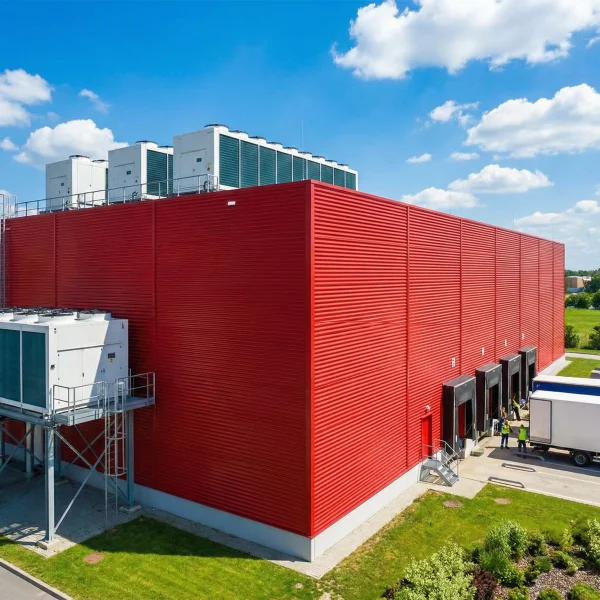
Thanks to its closed-cell structure, EPS offers reliable thermal insulation performance. However, compared to PUR and PIR systems, its fire resistance and temperature tolerance are more limited. For this reason, EPS is typically used in low to medium-risk applications such as warehouses, agricultural buildings, and storage facilities.
EPS cores help maintain smooth panel surfaces and contribute to dimensional stability. Its resistance to long-term deformation ensures consistent panel performance over time.
With its lightweight structure, affordability, and adequate insulation performance, EPS remains a practical insulation solution for sandwich panel systems.